Sensitive and Reactive Skin: Reading Your Own Triggers
Sensitive is a state more often than it is a skin type. Learning to read the pattern is more useful than buying a product labelled gentle.

Most people who describe their skin as sensitive are not describing something they were born with. They are describing something that developed, often over months, usually after a period of doing a great deal to their face. The distinction is not academic. If sensitivity is a fixed type, the only strategy is avoidance. If it is a state, it can be reversed.
In a hot, humid, high UV city, the picture is complicated further by heat, sweat, air conditioning, sunscreen worn every day and cleansing done more often than skin strictly requires. Untangling that takes method rather than a new product.
Sensitive as a condition, sensitised as a state
Genuinely sensitive skin is a constitutional trait. It tends to appear early in life, runs in families, and often accompanies a tendency towards eczema, rosacea or hay fever. The barrier is structurally thinner, nerve endings sit closer to the surface, and the threshold at which a stimulus registers as stinging or burning is simply lower. This skin is manageable, but it does not become robust.
Sensitised skin is acquired. The barrier has been compromised by something you are doing, or by the environment, and the compromise allows irritants and allergens to penetrate more easily while water escapes more freely. Skin that was unremarkable for thirty years starts to sting when you apply a product it accepted last month. This is the far more common presentation, and it responds to being left alone.
The clue is usually in the timeline. Lifelong pattern, or new development? If you can name a period when your skin behaved differently, you are probably dealing with a sensitised state.
The common triggers
Very few of these are exotic. Most are ordinary things done too often.
Fragrance. Both synthetic fragrance and natural aromatic compounds. Fragrance is among the most frequently identified causes of contact allergy in cosmetics, and it appears in cleansers, moisturisers and sunscreens as often as in perfume.
Essential oils. Natural is not a safety category. Citrus oils, lavender, peppermint, ylang ylang and tea tree are all documented sensitisers, and oxidised oils are more reactive than fresh ones.
High pH cleansers. Healthy skin sits at roughly pH 4.7 to 5.5. Traditional soap runs closer to 9 or 10. Repeated alkaline cleansing disrupts the enzymes that build the barrier and shifts the microbial balance on the surface.
Over exfoliation. The most common cause we see. A daily acid toner plus a scrub plus a retinoid plus a cleansing brush is four exfoliating actions in one routine.
Heat. Hot showers, hot weather and sudden temperature changes all provoke vasodilation. Flushing that used to settle in minutes may take an hour once the barrier is impaired.
Hard water. Calcium and magnesium ions leave residue that can bind to skin and increase irritation, and they reduce the efficiency of surfactants so people cleanse harder.
Friction. Flannel cloths, muslin, vigorous towel drying, rubbing sunscreen in aggressively, resting a chin on a hand at a desk. Mechanical irritation is easy to overlook because it does not come in a bottle.
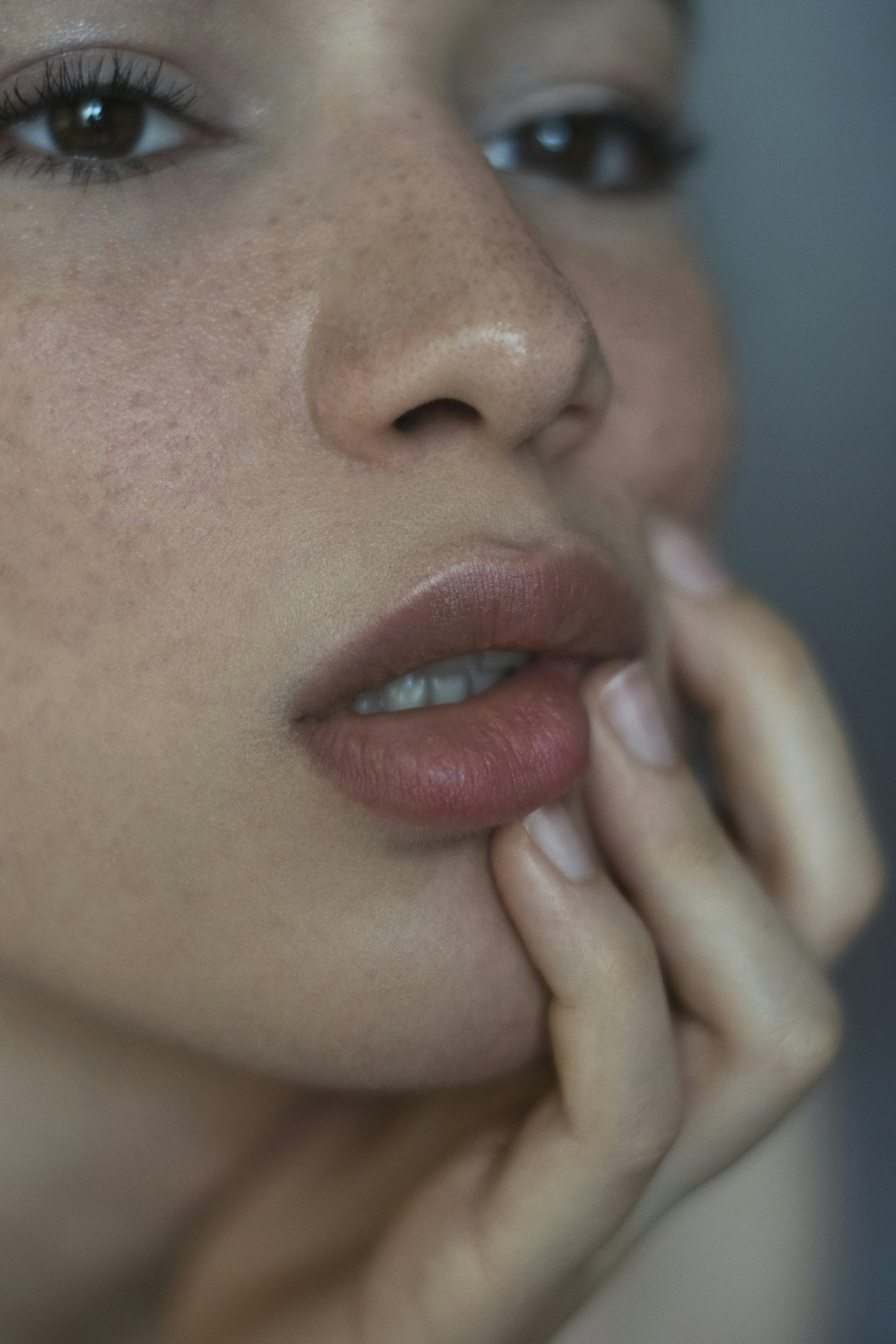
The useful question is rarely which product to add. It is which of several overlapping actions to remove.
Patch testing, done properly
A dab on the back of the hand for five minutes tells you nothing. Delayed reactions are the norm rather than the exception, and the skin of the hand behaves very differently from facial skin.
A test worth running: apply a small amount of the product to the same site twice daily for five to seven consecutive days. Choose the inner forearm near the elbow crease, or better, the skin just in front of the ear, which behaves most like the face. Leave it in place, do not wash it off deliberately, and watch for redness, bumps, itching, scaling or a stinging sensation that persists beyond a minute or two.
Immediate stinging that fades quickly is often a sensory response rather than a true allergy, common with vitamin C or hydroxy acids on a compromised barrier. A reaction that appears on day three or four, and looks like a defined patch of redness, is closer to an allergic contact reaction and is worth taking seriously.
"If you reintroduce three products in one week and something flares, you have learned nothing except that one of three things is a problem."
The elimination method: four weeks
This is the single most useful thing you can do for reactive skin, and it costs nothing.
Weeks one and two: strip back
Reduce to three products. A gentle, low foaming cleanser used once a day in the evening, rinsing with lukewarm water in the morning. A simple moisturiser with no fragrance, no essential oils and no active ingredients. A mineral or well tolerated sunscreen, since going without is not an option in this climate. Nothing else. No acids, no retinoids, no vitamin C, no masks, no scrubs, no cleansing devices.
Skin usually settles noticeably within ten to fourteen days. If it does not settle at all, that is useful information and points towards an underlying condition rather than a product problem.
Weeks three and four: reintroduce, one at a time
Add one product. Use it for a minimum of seven days before adding anything else. Introduce the least active items first: a hydrating serum, then a richer moisturiser, then treatment actives last. If something provokes a reaction, remove it and let skin settle for a full week before continuing. Resist the urge to speed this up. The whole value of the method lies in changing one variable at a time.
Keep a log, and keep it simple
Memory is unreliable about skin because reactions are delayed and daily variation is large. A note on your phone is enough. Each day, record the date, what you applied morning and evening, and a score from one to five for redness, stinging and tightness. Add one line for anything unusual: a long day in the sun, a flight, a spicy meal, a new laundry detergent, poor sleep, a stressful week.
After a month, patterns become visible that were invisible day by day. People frequently discover their flares track the working week rather than any product, or follow the days they swim, or cluster in the fortnight before a period. That is not something a product label can tell you.
What a soothing formula actually does
Calming is a vague word, so it is worth being specific about the mechanisms available to a topical formula.
It replaces missing barrier lipids. Ceramides, cholesterol and free fatty acids in appropriate proportion help restore the structure between corneocytes, reducing the penetration of irritants and slowing water loss.
It reduces water loss physically. Occlusive and semi occlusive agents form a layer that lowers transepidermal water loss, buying the barrier the conditions it needs to repair itself.
It moderates the visible inflammatory response. Ingredients such as niacinamide, panthenol, allantoin, bisabolol and certain botanical extracts are used for their comforting effect on skin that looks and feels irritated.
It quiets sensory signalling. Some ingredients reduce the sensation of stinging and heat without changing the barrier itself. This is why a product can feel immediately better while the underlying repair takes weeks.
What a soothing formula does not do is override continued irritation. If you calm skin in the evening and exfoliate it the next morning, the formula is not failing. The routine is.
When to stop self managing
Skincare supports skin. It does not diagnose, and it does not treat disease. Persistent redness across the central face, visible capillaries, flushing that comes with a burning sensation, itching that disturbs sleep, scaling that keeps returning to the same patches, or any flare pattern that does not resolve after four to six weeks of a stripped back routine should be assessed by a dermatologist. Rosacea, seborrhoeic dermatitis, perioral dermatitis and contact allergy all look broadly similar to the untrained eye and are managed quite differently. Continuing to swap moisturisers for a year is the expensive route to the same conclusion.
For everyone else, the answer is usually subtraction. Reactive skin rarely needs another product. It needs fewer of them, chosen carefully, applied consistently, and given the several uninterrupted weeks a barrier takes to rebuild itself.

