Hyaluronic Acid, Explained Without the Marketing
It holds water. That much is true. What matters is where it holds it, at what molecular weight, and what you put on top.

Hyaluronic acid has been marketed so thoroughly that the useful facts about it have been buried under the promotional ones. The claim you see most often, that it holds a thousand times its weight in water, is broadly true in a beaker and close to meaningless on a face. What matters is where the water is held, at what molecular weight, and what you put on top.
What it actually is
Hyaluronic acid is a glycosaminoglycan, a long chain sugar molecule that occurs naturally throughout the body. It is a major component of the extracellular matrix in the dermis, where it sits between collagen and elastin fibres and holds the water that gives the tissue its volume and resilience. It is also found in the fluid of the joints and in the eye.
In the skin it is produced and broken down continuously, with a turnover measured in days. Its quantity in the dermis declines with age, and that decline is one factor in the loss of plumpness over time. To be precise: applying hyaluronic acid to the surface does not replenish the dermal supply. Those are separate systems, and no topical product bridges them.
What a topical hyaluronic acid does is act as a humectant in the upper layers of the epidermis. It attracts water and holds it in the stratum corneum, where it improves how the surface looks, feels and functions. That is a real and useful effect. It is simply a smaller and more local one than the marketing suggests.
"Applying hyaluronic acid to the surface does not restock the dermis. It hydrates the layers you can see, which is worth doing on its own terms."
Molecular weight and depth
The single most useful thing to understand about hyaluronic acid is that it is not one ingredient. It is a family, distinguished by chain length, and the chain length determines behaviour.
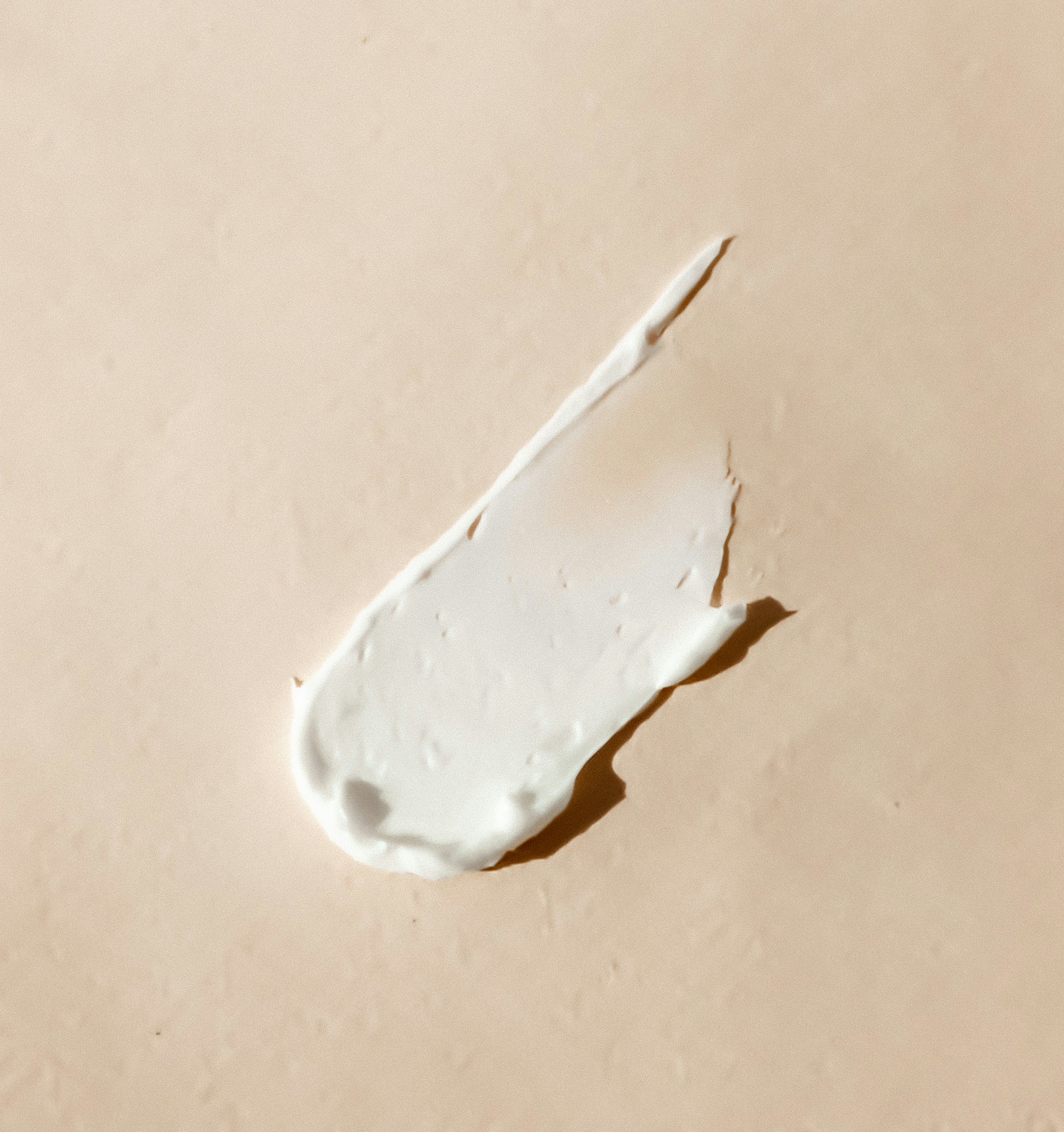
Chain length decides everything: where the molecule stops, and what it does when it gets there.
High molecular weight hyaluronic acid, above roughly one million daltons, is a very large molecule. It does not penetrate. It forms a hydrated film on the surface, which smooths the skin optically, reduces water loss modestly, and gives that immediate cushioned feel. The effect is temporary, and it is responsible for most of the pleasure of using a hyaluronic serum.
Low molecular weight fractions, typically in the tens to low hundreds of thousands of daltons, are small enough to move into the upper stratum corneum. They hydrate within the tissue rather than on it, and the effect lasts longer because it is not simply sitting on the outside waiting to be wiped away.
Very low molecular weight fragments, sometimes called oligomers, penetrate further still. One nuance is worth knowing: some research indicates that very short fragments act as signalling molecules and, at certain sizes, are associated with an inflammatory response. Well built formulas therefore use a defined blend of weights rather than pushing for the smallest fragment.
A serum listing several hyaluronic derivatives is usually doing this deliberately. High weight sits on top and smooths, mid weight hydrates the upper layers, low weight goes deeper. That is a considered formula, not padding.
The humectant trap
Here is the part that gets people into trouble, and it depends entirely on the air around you.
A humectant attracts water from wherever water is available. In humid air it pulls from the atmosphere, which is exactly what you want. In dry air there is little atmospheric moisture to draw on, so a humectant applied to the skin with nothing above it can draw water upward from the deeper layers of the epidermis and lose it to the environment. The skin ends up drier than before. People describe this as hyaluronic acid making their skin tight, and they are not imagining it.
Bangkok is humid, so outdoors the humectant has plenty to work with. But most people spend the day in air conditioning, and air conditioning is a dehumidifier. An office at twenty three degrees can be as dry as a European winter. The humectant trap is live here, just not where you would expect.
The fix is straightforward and it has two parts. Apply to damp skin, so there is water present to be held. Then apply something above it that slows evaporation.
Why it needs something on top
A humectant holds water. It does not stop water leaving. Those are two different functions, performed by two different categories of ingredient, and hyaluronic acid only does the first.
The second function belongs to occlusives and emollients: squalane, plant oils, fatty alcohols, silicones, butters. They reduce transepidermal water loss by forming a barrier at the surface. With a humectant they make sense of each other. Alone, the humectant leaks and the occlusive seals in whatever hydration happens to be there.
On damp skin. Apply the serum within a minute of cleansing, while the face is still slightly wet.
Follow immediately. A moisturiser, emulsion or fluid within a minute or two, before the serum has fully dried down.
Match the weight to the climate. In this climate a light gel cream or an oil free emulsion is usually enough. The occlusive layer needs to exist, not to be heavy.
Realistic expectations
What hyaluronic acid reliably does: improves surface hydration, softens the look of fine dehydration lines within hours, gives a smoother surface for makeup, supports comfort in skin that feels tight, and supports the barrier indirectly by keeping the stratum corneum hydrated so its enzymes function properly.
What it does not do: build collagen, change the depth of established lines, replace lost volume, reduce pigmentation, or alter the dermis from a topical application. Fine lines of dehydration will look better. Creases from years of expression will not.
The timeframe deserves honesty too. The smoothing appears almost immediately and is largely gone by the next morning unless you reapply. This is a daily maintenance ingredient, not a cumulative treatment, and daily maintenance of hydration is one of the most worthwhile things you can do for skin here.
How to read a label
Hyaluronic acid appears under several names, and it is useful to recognise them. Sodium hyaluronate is the salt form and is what is most commonly used, because it is more stable and absorbs better than the acid form. Hydrolysed hyaluronic acid means the chains have been broken down to lower weights. Sodium acetylated hyaluronate has been modified to be more substantive to the skin surface, so it stays put longer. Sodium hyaluronate crosspolymer forms a lightly bound network that releases hydration more gradually.
Position in the list tells you less than you might hope. Hyaluronic acid is used at low percentages by nature: above roughly one to two per cent a formula turns tacky and stringy, so a product boasting a high figure is usually describing a diluted solution. Its presence in the last third of a list is normal, not a token amount.
What matters more is the company it keeps. Glycerin alongside it is a good sign: a cheaper humectant working at a different scale, and the two complement each other. Ceramides, panthenol, squalane or a fatty acid blend suggest the formulator has thought about sealing as well as attracting.
"Glycerin next to hyaluronic acid on a label is not filler. It is a formulator covering two different mechanisms of hydration."
Common mistakes
Applying to bone dry skin in an air conditioned room, with nothing on top, is the classic error and produces the tightness people complain about. Stacking a hyaluronic toner, essence and serum adds no benefit and often causes pilling under sunscreen. Expecting structural change from a hydration ingredient leads to disappointment the product did not earn. And treating it as an alternative to a moisturiser, rather than a step before one, undoes all the rest.
Used correctly it is one of the most dependable ingredients in skincare. Modest, well understood, and considerably more useful when you stop expecting it to be something it never was.


